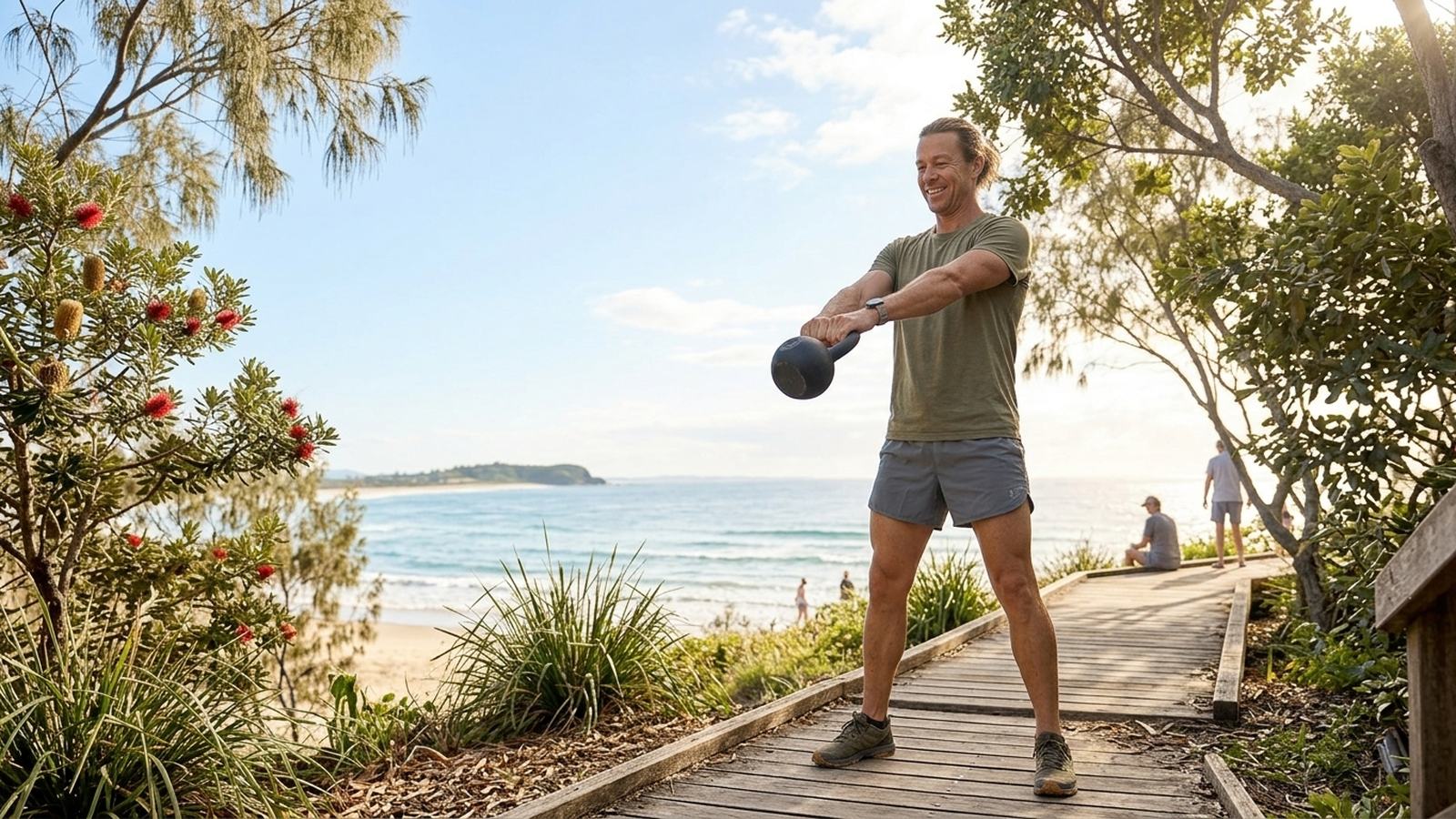
Strength training's reputation was built on aesthetics. Its evidence base was built on almost everything else.
Bone density
Bone adapts to load. Resistance training is one of the few interventions shown to maintain — and in some populations improve — bone mineral density, which is why it appears in osteoporosis prevention guidance rather than just fitness advice. The effect matters most where the risk concentrates: women through and after menopause, and everyone with age.
Metabolic health
Muscle is the body's largest site of glucose disposal. More trained muscle means more capacity to clear blood sugar, which is why resistance training improves insulin sensitivity and features in guidance for preventing and managing type 2 diabetes. This is also the mechanism behind a less obvious point: muscle supports resting energy expenditure, so maintaining it maintains the budget.
Healthy ageing
Muscle mass declines with age — the decline has a name, sarcopenia, and consequences: frailty, falls, loss of independence. Resistance training is the most direct counter available, and the research on older adults keeps producing the same finding — the capacity to build strength persists into the eighties and nineties. The gains are proportionally largest in the people who started with least.
Function, mood and the rest
Australian physical activity guidelines recommend muscle-strengthening activity at least twice a week — not as an optional extra for gym-goers but as part of baseline guidance for adults. Beyond the headline systems, the evidence associates resistance training with better balance and fall prevention, support for joint health, and meaningful effects on mood and cognitive function.
What the evidence doesn't say
- It isn't a treatment. Training supports bone, metabolic and functional health; it does not treat diagnosed conditions, which need medical management alongside.
- More isn't linearly better. The largest gains come from doing something rather than nothing; twice a week captures most of the benefit for most people.
- Equipment is optional. Body weight, bands and household objects load muscle perfectly well; the barbell is one tool, not the definition.
- Starting points differ. Existing conditions, injuries or long inactivity warrant guidance first — an exercise physiologist is the profession built for exactly this.
The bottom line
The case for strength training rests on bone, glucose handling, and the preservation of independence with age — three things that decline quietly and are hard to buy back later. Twice a week is where the guidance starts, and it is the most evidence-dense habit available for its time cost.
Sources
- Australian Government Department of Health. (n.d.). Physical activity and exercise guidelines for adults. https://www.health.gov.au/topics/physical-activity-and-exercise
- Healthy Bones Australia. (n.d.). Exercise and bone density. https://healthybonesaustralia.org.au/
- Better Health Channel. (n.d.). Resistance training - health benefits. https://www.betterhealth.vic.gov.au/health/healthyliving/resistance-training-health-benefits
Optima Stasis clinical team
Reviewed 17 August 2026. Health Hub articles are reviewed by our clinical team and revisited as guidance changes.