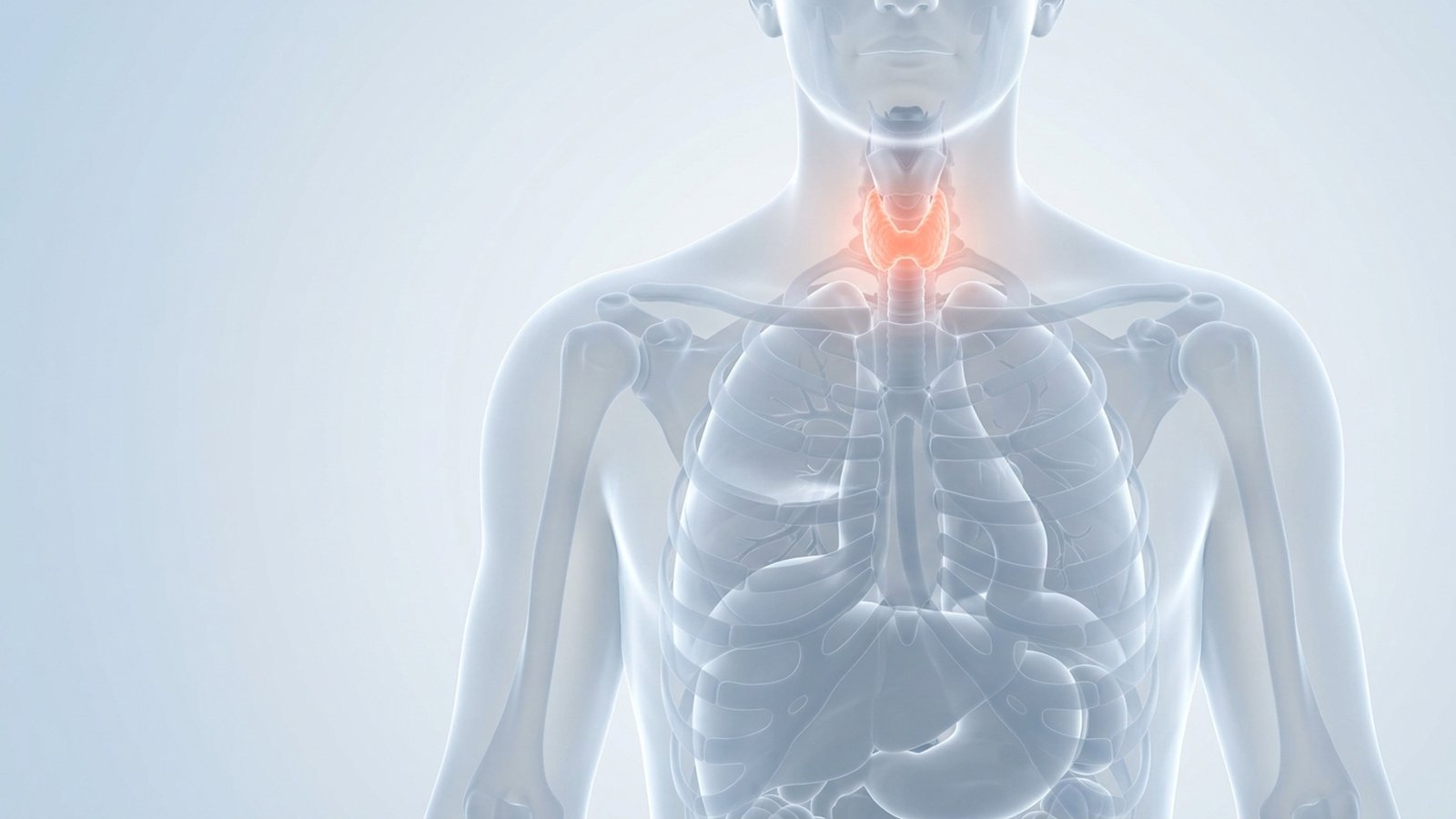
T4 is the thyroid's main output — and it is mostly inactive until the body converts it into something else.
What T4 is
Thyroxine, or T4, is the principal hormone the thyroid gland produces. It is involved in metabolic rate, body temperature, heart rate, muscle function, bone maintenance, and aspects of mood and concentration.
It is secreted largely in an inactive form and converted into T3, the active hormone, in tissues around the body. So T4 functions as a reservoir: plentiful, stable, and drawn on as needed.
Free T4 versus total T4
Over 99 per cent of the T4 in your blood is bound to carrier proteins and unavailable to tissue. The small remaining fraction — free T4, or FT4 — is the part that can actually act.
This is why laboratories generally report FT4 rather than total T4. Conditions that change protein levels, including pregnancy and some medications, shift the total while leaving the free fraction relatively unaffected. Measuring the free portion avoids that distortion.
Why it's measured
FT4 is usually measured alongside TSH rather than alone, because the pair together say more than either does separately. TSH indicates what the pituitary is asking for; FT4 indicates what the thyroid is delivering.
It is used to investigate suspected thyroid dysfunction, to monitor a known thyroid condition, and sometimes as a check in people with a family history of thyroid disease.
What the numbers mean
A typical adult reference range for FT4 is around 12 to 22 pmol/L, varying by laboratory and assay.
Pregnancy shifts the picture, and pregnancy-specific ranges are used rather than the standard adult ones. FT4 also tends to drift slightly with age, and thyroid conditions become more common after 50 — where symptoms can overlap with menopause and other age-related changes, which is part of why testing is useful rather than guessing.
What moves FT4
Lower FT4 is most commonly associated with an underactive thyroid, frequently caused by an autoimmune condition in which the immune system gradually reduces the gland's capacity. Previous thyroid surgery or treatment, pituitary problems, and some medications can also lower it.
Raised FT4 is most commonly associated with an overactive thyroid. Autoimmune overactivity is the usual cause, though thyroid nodules producing hormone independently, and excessive iodine intake, can also raise it.
What FT4 won't tell you
- It isn't interpreted alone. FT4 without TSH is difficult to read; the two are assessed together.
- It doesn't identify the cause. Establishing why a level has shifted generally needs antibody testing.
- Slightly outside range isn't necessarily meaningful. Where TSH is normal and FT4 is marginally off, repeat testing is common before anything is concluded.
- It isn't the active hormone. T3 does the work at tissue level, and conversion from T4 to T3 varies between people.
The bottom line
T4 is what the thyroid actually makes, and free T4 is the fraction available to do anything. Read next to TSH, it shows whether the gland is meeting the demand being placed on it.
Sources
- American Thyroid Association. (n.d.). Thyroid function tests. https://www.thyroid.org/thyroid-function-tests/
- Royal College of Pathologists of Australasia. (n.d.). Thyroid function tests. https://www.rcpa.edu.au/Manuals/RCPA-Manual/Pathology-Tests
Optima Stasis clinical team
Reviewed 16 August 2026. Health Hub articles are reviewed by our clinical team and revisited as guidance changes.