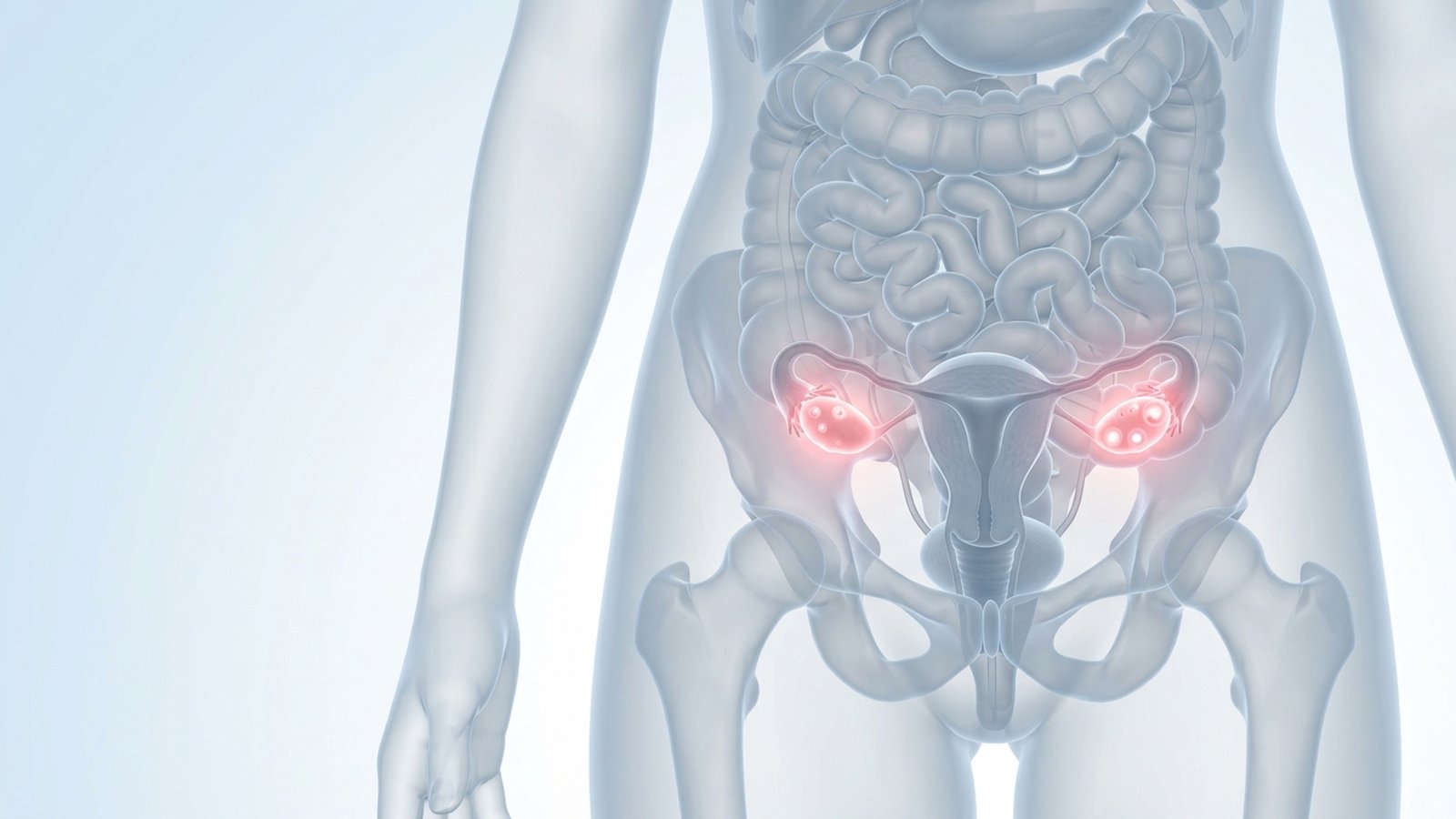
FSH is the other half of the pair that runs reproduction — and its behaviour with age is one of the more predictable patterns in endocrinology.
What FSH is
Follicle-stimulating hormone is produced by the pituitary gland alongside luteinising hormone. The two are known as gonadotrophins because they stimulate the gonads — the ovaries and testes.
In women, FSH promotes the growth of ovarian follicles, the small fluid-filled sacs in which eggs develop, and prompts those follicles to produce oestrogen. In men, it supports sperm production and maturation.
Why it's measured
FSH is used to investigate irregular periods, difficulty conceiving, and questions about ovarian or testicular function. It contributes to assessing menopause where the picture is unclear, and to investigating low testosterone in men.
It is essentially always measured with LH. The relationship between the two is more informative than either alone — normally they run at similar levels, and a shifted ratio can point toward particular conditions without being diagnostic on its own.
Timing matters
For women who are menstruating, FSH is ideally measured early in the cycle, around day three, and typically between days two and five. Sampling outside that window produces results that are difficult to compare with anything.
This is one of the more common reasons a hormone result comes back looking odd — not because anything is wrong, but because of when the sample was taken.
What the numbers mean
Ranges depend on sex, age and cycle phase, and vary between laboratories. Postmenopausal levels are substantially higher than premenopausal ones, which is the expected pattern rather than a problem.
Higher FSH generally indicates the ovaries or testes are responding less to the pituitary's signal, so the pituitary raises its output. In women this is characteristic of the menopausal transition; it can also relate to reduced ovarian reserve. In men it can follow testicular injury or other causes of reduced function.
Lower FSH reflects reduced pituitary output, which can relate to pituitary function itself, to sustained stress, to very low body weight, or to hormonal contraception.
FSH across the menopause transition
FSH begins rising years before menopause and fluctuates considerably through perimenopause — which is exactly why a single measurement is a poor way to establish where someone is in that transition. Levels climb more sharply in the couple of years beforehand and continue rising afterwards before stabilising.
What FSH won't tell you
- It doesn't diagnose menopause. That is a clinical assessment; FSH fluctuates too much during perimenopause to settle it.
- It isn't a fertility measure. It contributes to assessing ovarian reserve without predicting conception.
- Cycle day dominates. A result without a cycle day attached is hard to interpret.
- It isn't read alone. FSH and LH together say more than either separately.
The bottom line
FSH is a workhorse reproductive marker for both sexes, and it shifts predictably with age. Its usefulness depends almost entirely on being measured at the right point in the cycle and read alongside LH.
Sources
- Pathology Tests Explained. (n.d.). Test index. https://pathologytestsexplained.org.au/
- Royal College of Pathologists of Australasia. (n.d.). Pathology tests. https://www.rcpa.edu.au/Manuals/RCPA-Manual/Pathology-Tests
Optima Stasis clinical team
Reviewed 16 August 2026. Health Hub articles are reviewed by our clinical team and revisited as guidance changes.