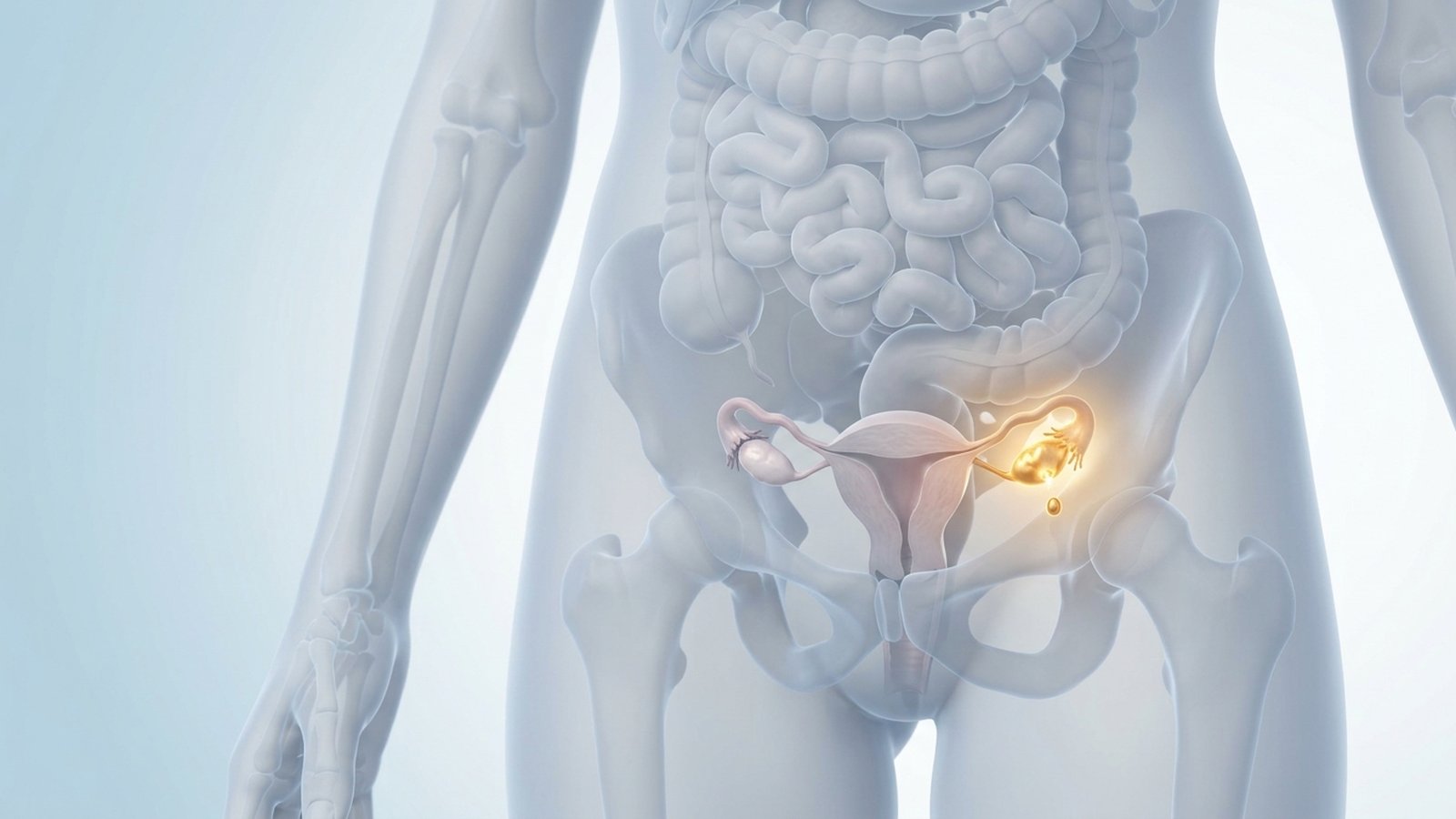
LH is a trigger hormone — and what it triggers depends entirely on who is being tested.
What LH is
Luteinising hormone is made by the pituitary gland at the base of the brain. Together with follicle-stimulating hormone, it forms the pair that regulates reproductive function in both sexes.
In women, LH drives ovulation. In men, it stimulates the testes to produce testosterone.
What it does in women
Through the first half of the menstrual cycle, LH sits relatively low. Around the midpoint it surges sharply, and that surge is what causes the ovary to release a mature egg.
The surge is reliable enough that ovulation predictor kits are built around detecting it in urine. Afterwards, LH supports the remaining follicle in becoming the corpus luteum, which produces progesterone to support early pregnancy.
What it does in men
LH acts on cells in the testes that produce testosterone, which in turn supports sperm production and other testosterone-dependent functions. Where testosterone is low, LH helps distinguish a testicular cause from a pituitary one — low testosterone with high LH points one way, low testosterone with low LH points another.
Why it's measured
LH is measured when investigating irregular or absent periods, difficulty conceiving, early or delayed puberty, and low testosterone in men. It is essentially always measured with FSH, and often with oestrogen or testosterone, because the pattern between them carries the meaning rather than any single value.
What the numbers mean
In women, the reference range depends heavily on cycle phase. Levels are relatively low through the follicular phase, spike dramatically at ovulation, and settle again afterwards — so the day of testing matters as much as the number. In men, levels are steadier.
Lower LH can relate to pituitary or hypothalamic function, and to significant stress, very low body weight or heavy training load. Higher LH suggests the ovaries or testes are not responding, which is the expected pattern around menopause and in some other conditions.
What LH won't tell you
- It isn't read alone. LH without FSH, and without knowing the cycle day, is close to uninterpretable in women.
- It doesn't measure fertility. Confirming ovulation occurs is not the same as predicting conception.
- Timing changes everything. The same woman can produce wildly different results a few days apart.
- It doesn't identify a cause. A high or low result indicates where to look next, not what is happening.
The bottom line
LH is the pituitary's instruction to the ovaries or testes. Read with FSH and with the cycle day known, it says a good deal about how the reproductive system is functioning — and read without either, it says very little.
Sources
- Pathology Tests Explained. (n.d.). Test index. https://pathologytestsexplained.org.au/
- Royal College of Pathologists of Australasia. (n.d.). Pathology tests. https://www.rcpa.edu.au/Manuals/RCPA-Manual/Pathology-Tests
Optima Stasis clinical team
Reviewed 16 August 2026. Health Hub articles are reviewed by our clinical team and revisited as guidance changes.