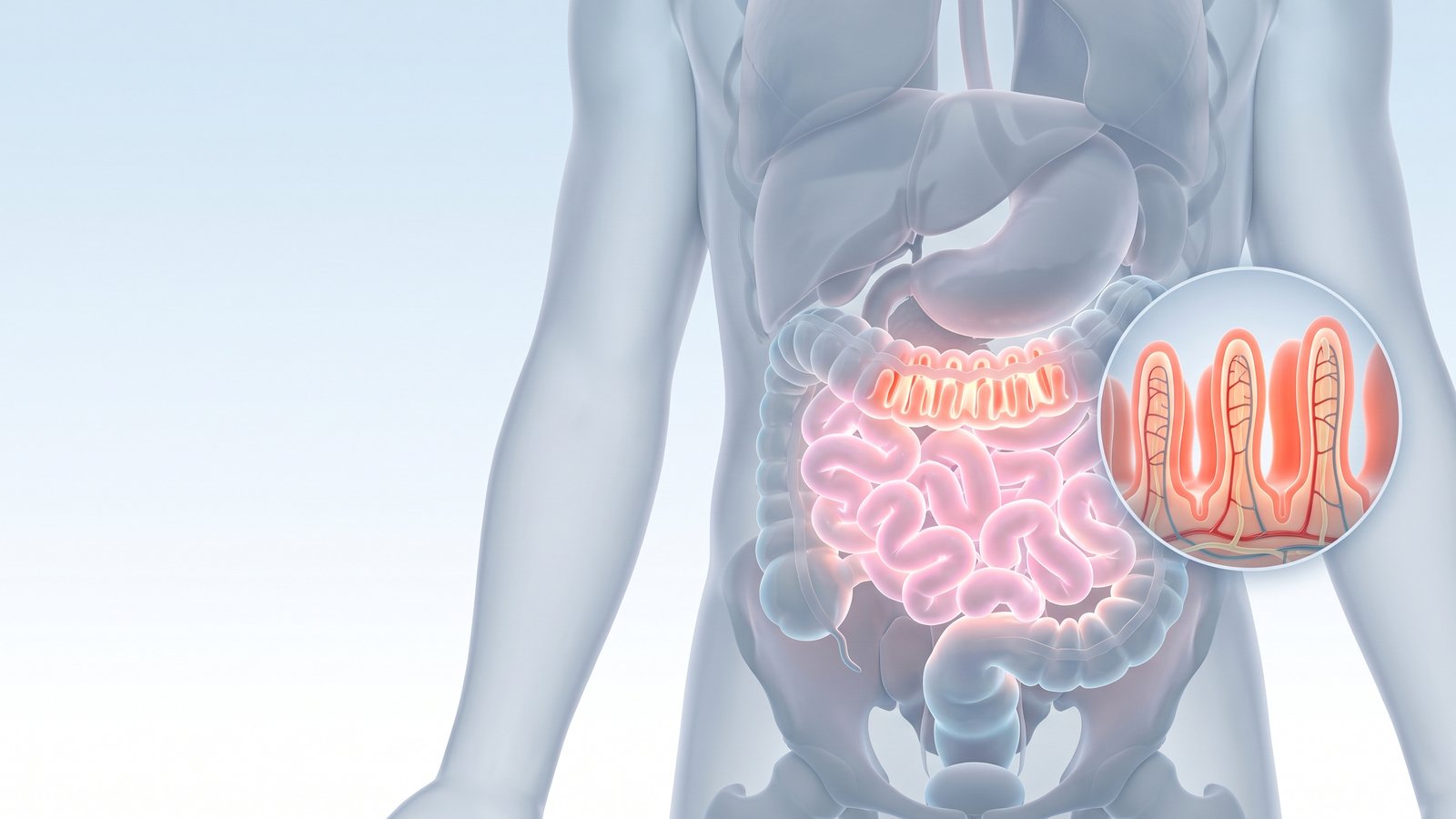
Gut complaints send more people searching for answers than almost anything else — and the useful surprise is how much ordinary blood work contributes before anyone reaches for a scope.
What blood can see about the gut
The gut's job is absorption, and its problems leak into blood as deficits and signals:
Full blood count — anaemia is one of the most important gut clues there is, because slow, invisible blood loss from the digestive tract shows up here first. Red cell size adds direction: small cells point toward iron loss, large toward B12 or folate shortfall.
Iron studies, B12 and folate — the absorption report card. Unexplained deficiency in any of them raises the question of whether the gut is taking up what the diet supplies.
Coeliac serology — the antibody screen for coeliac disease, with one caveat that decides everything: the tests only work on a gluten-containing diet. Going gluten-free before testing can turn a true positive falsely negative — so test first, experiment after, and anyone already gluten-free needs a GP conversation about how to test properly.
CRP — inflammation somewhere, gut included. It helps separate inflammatory conditions from functional ones, imperfectly but usefully.
Liver panel — the digestive system's neighbour, routinely checked alongside because its problems and the gut's overlap and interact.
What blood cannot do
Blood work cannot see structure or lining — that is what endoscopy and imaging are for — and it cannot diagnose irritable bowel syndrome, which is identified clinically, partly by ruling out the conditions above. A clean panel narrows the field meaningfully; it does not name the answer.
The symptoms that skip the queue
Some features are prompt-GP territory regardless of any test result: blood in the stool, unexplained weight loss, a persistent change in bowel habit, symptoms waking you from sleep, or unexplained anaemia — and a family history of bowel cancer lowers the bar for everything. These are not interpretation exercises; they are appointments.
What this panel won't tell you
- The diagnosis. Blood narrows and flags; gut diagnoses are made clinically, sometimes endoscopically.
- That normal means nothing's wrong. Plenty of significant gut conditions run with unremarkable bloods.
- Anything about coeliac off gluten. The serology caveat is absolute enough to repeat.
- What to cut from your diet. Elimination experiments have their place — after testing, ideally with guidance, never instead of assessment.
The bottom line
For gut symptoms, blood work is the intelligent first pass: it finds the anaemia, audits the absorption, screens for coeliac while the diet still allows it, and reads the inflammation. What it finds — and what it doesn't — then belongs in a GP conversation, which the red-flag list above should reach without waiting for results.
Sources
- Coeliac Australia. (n.d.). Getting diagnosed. https://coeliac.org.au/
- Healthdirect Australia. (n.d.). Bowel symptoms. https://www.healthdirect.gov.au/
Dr Freda Steyn
Reviewed 17 August 2026. Health Hub articles are reviewed by our clinical team and revisited as guidance changes.